Cingkong Display Font for Handmade Labels & Printables
As a maker who designs printable wall art, boutique gift tags, and custom wedding stationery—plus physical products like soy candle labels and linen tea towel prints—I’m always hunting for display fonts that do more than just look pretty. They need to cut cleanly on my Cricut, hold charm at 12pt on a tiny sticker, and still feel intentional when scaled up across a farmhouse-style welcome sign. That’s why Cingkong landed in my font folder and hasn’t left.
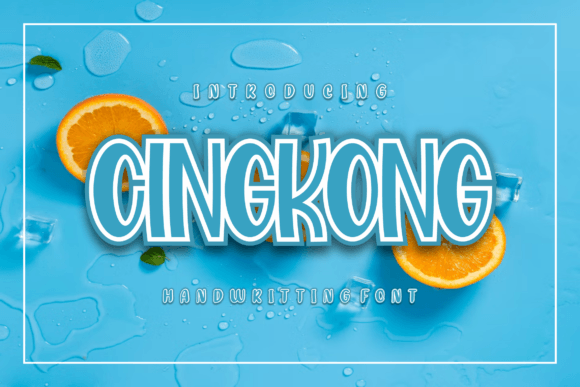
Cingkong is a whimsical display font with rounded, friendly letterforms, gentle curves, and just enough bounce to feel handmade—not cartoonish. It’s not a script, but it carries the warmth of one: soft terminals, open counters, and consistent x-height that keeps every character legible, even when resized. The lowercase “a,” “g,” and “e” have subtle personality without sacrificing clarity—critical when your customer is reading a product label under café lighting or squinting at a 1.5-inch sticker on a mini soap bar.
I use Cingkong most often for short, high-impact text: shop names on kraft paper tags, “Hand-poured” on candle jars, “Thank You” on greeting cards, and seasonal phrases like “Cozy & Covered” on winter-themed planner stickers. Its design shines where attention is brief but emotional resonance matters—like a baby shower invitation that says “Welcome, Little One” in soft ink on textured cardstock. Because it’s a display font—not meant for paragraphs—it works best as a headline, title, or focal phrase paired with a clean supporting typeface.
For crafters using cutting machines, readability at small sizes is non-negotiable. I’ve tested Cingkong down to 8pt on matte vinyl stickers (with bold weight enabled), and it held up beautifully—no broken joins or collapsed curves. On my Silhouette Cameo, it cuts cleanly at 14pt for jar labels and scales gracefully to 120pt for large-format SVG wall art files. Just avoid ultra-thin weights for physical cutting; stick with the regular or bold variants unless you’re printing only.
Real-world projects where Cingkong consistently elevates my work:
- Candle & Soap Labels: Paired with a crisp sans serif (like Montserrat or Inter) for ingredients and weight info—Cingkong handles the brand name and scent descriptor (“Lavender + Oat Milk”) with instant charm.
- Wedding Welcome Signs: Printed on birch plywood or mounted on canvas, Cingkong’s balanced spacing keeps lines even and airy—even with mixed-case phrases like “The Smiths Invite You.”
- Digital Printables: Planner covers, habit trackers, and quote pages gain visual warmth without overwhelming layouts. Its consistent baseline makes alignment intuitive in Canva or Affinity Designer.
- Seasonal Packaging: Think Easter egg tags, holiday mug wraps, or summer market tote bag prints—Cingkong adds playfulness while staying legible on fabric or ceramic surfaces.
- Social Media Graphics: Instagram story banners and Etsy banner mockups pop with Cingkong headlines over neutral backgrounds. It reads well on mobile without extra kerning tweaks.
Font pairing is where Cingkong truly sings. I almost always pair it with a no-fuss sans serif for body text—something neutral like Open Sans or Lato—to let its personality shine without competition. For wedding stationery, I’ll sometimes layer it with a delicate serif (like Playfair Display) for formal details, keeping Cingkong reserved for names and celebratory phrases. Avoid pairing it with other highly decorative fonts—that dilutes its impact and muddies hierarchy.
Before downloading, check what’s included: Cingkong typically ships with OTF and TTF files, basic Latin character support (covering English, Spanish, French, German), and standard punctuation. While it doesn’t include extensive multilingual glyphs or stylistic alternates, its core set covers 99% of craft and small-business needs—from “Made with Love” tags to “Small Batch • Local” product seals. No ligatures or swashes clutter the set, which I appreciate—clean files mean fewer surprises in Silhouette Studio or Cricut Design Space.
And yes—commercial licensing matters. Cingkong is licensed for both personal and commercial use, meaning you can embed it in digital templates you sell on Etsy, use it in SVG files for cutting machine users, apply it to physical products like mugs or apparel, and even incorporate it into client branding packages. Just double-check your license file for any restrictions around resale of raw font files (which most reputable display fonts prohibit)—but using it in your finished designs? Absolutely allowed.
What sets Cingkong apart isn’t just its charm—it’s how thoughtfully it balances expression with function. It doesn’t sacrifice readability for quirk, nor does it lean so hard into “cute” that it limits your brand voice. Whether you're labeling hand-dipped chocolates or designing a minimalist baby announcement, Cingkong feels intentional, approachable, and quietly professional.
If you’ve been rotating through overly ornate scripts or stiff geometric fonts for your product labels and printables, give Cingkong space in your next project. Try it on a kraft tag beside a charcoal-gray sans serif. Use it for the title on your next digital planner cover. Test it at 16pt on a sticker sheet before committing to a full run. You’ll notice right away how much lighter, friendlier, and more cohesive your product presentation becomes—not because it shouts, but because it welcomes.